Toyota RAV4 History: How This SUV Changed the Entire Automotive Industry | Complete Evolution Guide
The world’s top-selling vehicle isn’t a sleek sports car or a rugged pickup truck. It’s a compact crossover that reshaped the automotive landscape more profoundly than any vehicle in recent memory. The Toyota RAV4 transformed how we think about SUVs, dragging them from muddy trails into suburban driveways across America.
While iconic names like the Jeep Cherokee and Ford Bronco pioneered the sport utility segment, neither achieved what this unassuming Toyota accomplished—fundamentally rewriting the SUV playbook for an entire generation of drivers.
Table of Contents
The Visionary Concept That Started It All
1989 Tokyo Motor Show: A Bold Prediction
Toyota’s engineers began sketching ideas as early as 1986, culminating in the RAV-Four Concept’s debut at the 1989 Tokyo Motor Show. This prototype arrived like a breath of fresh air in an era dominated by truck-based behemoths.
Americans were embracing traditional body-on-frame SUVs that consumed fuel with remarkable efficiency—efficient at emptying your wallet, that is. Toyota’s compact unibody concept seemed almost rebellious in its cheerful optimism.
The RAV-Four Concept wasn’t trying to intimidate anyone. It borrowed styling cues from vehicles like the Suzuki Samurai, wrapped in protective plastic cladding. This playful approach disguised something revolutionary: Toyota was inventing the modern crossover SUV before the term even existed.
First Generation: Breaking New Ground (1996-2000)
American Debut and Initial Reception
After launching in Japan during 1994, the Recreational Active Vehicle with 4WD reached American shores in February 1996. The initial offering featured three doors—an unconventional choice that emphasized its car-like character.
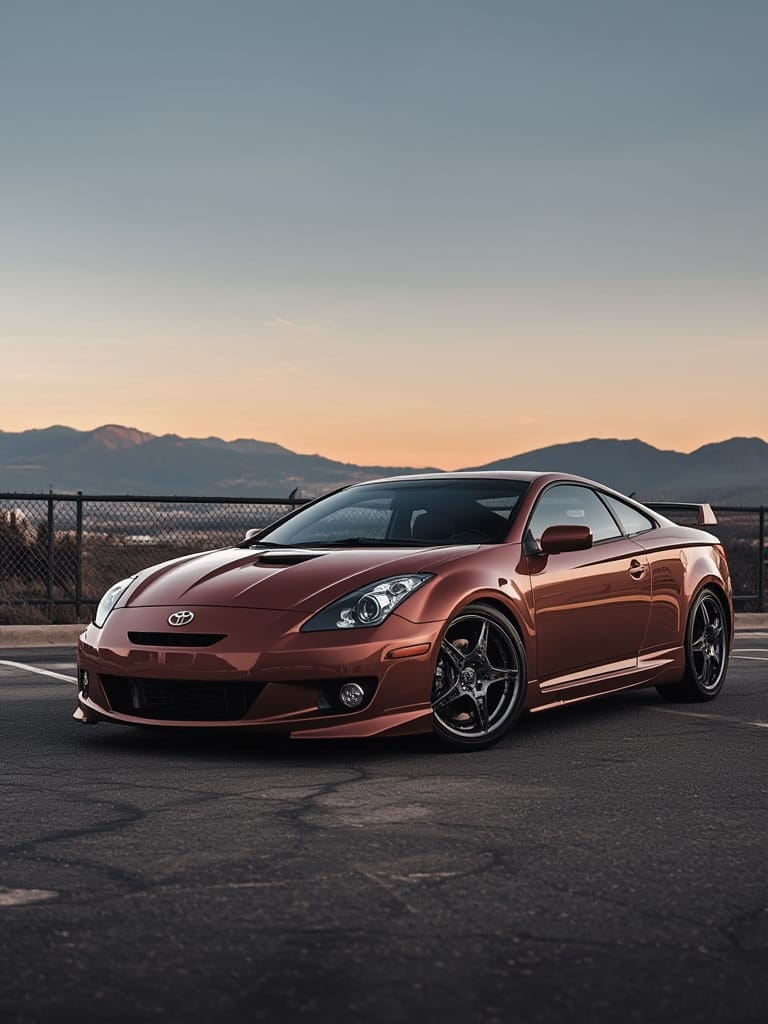
Toyota wasn’t completely unfamiliar with all-wheel-drive systems, having previously experimented with All-Trac versions of the Corolla and Celica. The original RAV4 utilized a Corolla platform beneath its raised bodywork.
Powertrain and Performance Specs
Under the hood sat a Camry-sourced 2.0-liter four-cylinder engine producing 120 horsepower, paired with either:
- Five-speed manual transmission
- Four-speed automatic transmission
Buyers could choose between front-wheel drive or all-wheel drive configurations, adding flexibility to the lineup.
Expanding the Range
Toyota quickly recognized the formula’s success and expanded offerings:
- 1995: Five-door model added for family-oriented buyers
- 1997: All-electric RAV4 EV introduced with approximately 100 miles of range
- 1998: Facelift applied across the lineup, plus a two-door soft-top variant for open-air enthusiasts
This compact vehicle handled like a sedan, hauled cargo like a wagon, and provided the elevated seating position that Americans increasingly craved.
Second Generation: Growing Up Fast (2001-2005)
The playful original gave way to a more mature second generation. Toyota eliminated the three-door configuration, focusing exclusively on a practical four-door layout ready for school runs and grocery trips.
Power came from the Camry’s 2.4-liter inline-four engine producing 148 horsepower initially, later upgraded to 161 horsepower for the 2004 model year. The five-speed manual transmission remained available for driving enthusiasts, while the electric variant continued production through 2003.
This generation represented Toyota’s recognition that buyers wanted practicality over personality—at least temporarily.
Third Generation: Power and Space (2006-2012)
Refined Styling Meets Stronger Engines
The third iteration arrived with smoother sheetmetal and a more sophisticated appearance. Toyota introduced its muscular 3.5-liter V6 engine producing 270 horsepower alongside a base four-cylinder option rated at 166 horses paired with a four-speed automatic.
Key Updates During the Generation
- 2009: Larger 2.5-liter four-cylinder introduced with 175 horsepower
- 2010: RAV4 EV returned featuring a Tesla-developed electric powertrain delivering 154 horsepower
- Five-speed manual transmission quietly discontinued
Physical dimensions increased by fourteen inches, allowing Toyota to squeeze in a third-row seat. While the manufacturer claimed seven-passenger capacity, that rearmost bench suited children better than adults.
Fourth Generation: Simplification Strategy (2013-2018)
Toyota seemed uncertain about the RAV4’s identity with this generation, eliminating several features that had defined previous versions.
What Disappeared
- Third-row seating option
- V6 engine choice
- Tesla-powered electric variant
- Side-hinged rear door (replaced with conventional roof-hinged hatch)
What Remained
A single powertrain option: a 176-horsepower 2.5-liter four-cylinder mated to a six-speed automatic transmission. The formula prioritized reliability and efficiency over excitement.
The significant addition came in 2016 when Toyota introduced a hybrid powertrain combining the 2.5-liter engine with three electric motors. This system produced 196 horsepower while achieving 33 mpg combined—impressive efficiency for a compact SUV.
Fifth Generation: Bold Redesign (2019-2025)
Aggressive New Styling Direction
The 2019 redesign brought dramatic angular sheetmetal with sharp creases and a more assertive road presence. This generation clearly aimed to project strength and capability.
Expanded Powertrain Options
Toyota offered multiple configurations:
- Base model: 203-horsepower 2.5-liter four-cylinder with eight-speed automatic
- Hybrid version: 219-horsepower combined output with excellent fuel economy
- 2020 TRD Off-Road: Featured torque-vectoring all-wheel drive, Multi-Terrain Select, and TRD-tuned suspension
- 2021 RAV4 Prime: Game-changing 302-horsepower plug-in hybrid delivering sports-car acceleration with SUV practicality
The Prime variant particularly impressed enthusiasts, offering genuine performance alongside environmental credentials. It could sprint past traditional sports sedans while consuming minimal fuel.
Sixth Generation: All-Hybrid Future (2026)
Complete Electrification Strategy
The newest Toyota RAV4 arrives later this year with a revolutionary mandate: every single variant features hybrid or plug-in hybrid technology. Traditional gasoline-only configurations have been permanently retired.
Styling remains evolutionary rather than revolutionary, maintaining visual continuity with the outgoing generation. However, the mechanical changes run deep.
Performance Breakthrough
In an unexpected move, Toyota introduced a GR Sport version producing 324 horsepower—the most powerful RAV4 ever offered. This performance-oriented variant combines impressive acceleration with the efficiency benefits of hybrid technology.
The 2026 model balances contradictory demands: enough power to excite driving enthusiasts while delivering the environmental credentials that matter to eco-conscious buyers.
The RAV4’s Lasting Legacy on the Automotive Industry
Market Dominance Through Innovation
From quirky outlier to segment-defining bestseller, the Toyota RAV4 trajectory demonstrates how understanding customer needs trumps following conventional wisdom.
Traditional SUVs offered capability many buyers never used, sacrificing daily livability for occasional off-road prowess. The RAV4 recognized that most drivers needed car-like handling, fuel efficiency, and cargo space—with just enough ruggedness for weekend adventures.
Reshaping Consumer Expectations
This single nameplate taught the industry that SUVs didn’t require truck frames, thirsty engines, or challenging handling characteristics. Crossovers could deliver the elevated seating position and versatility buyers wanted without the compromises they didn’t.
Competitors rushed to develop their own crossover SUVs, creating an entirely new segment that now dominates global sales charts. The RAV4 didn’t just participate in this revolution—it sparked it.
Why the RAV4 Continues to Matter
Modern car buyers take crossovers for granted, but someone had to prove the concept worked. Toyota took that risk with the original RAV4, betting that practical people wanted practical vehicles that happened to sit higher than sedans.
That gamble paid off spectacularly, transforming Toyota’s lineup while reshaping the entire industry’s product planning strategy. Every compact crossover on today’s roads owes a debt to the scrappy little Toyota that dared to be different.
Did You Like This Article?
skQzeggGVXXXJXru
KqWopPlNFjEZXWHEzgGF
FJ Returns
Waiting to order it!
vmqIfeXKmucuDGwQGabX
GqYadOddQZSVFKDoeN
Celica come back
Very informative and useful, details.
Good article
A lot information, thanks